Our organization is built on five core concepts that work together to create clarity about who does what, who decides what, and how we work together.
At Skyscrapers, we don’t organize around hierarchy or managers. Instead, our foundation is built on a hierarchy of aims and domains that are materialised through circles and roles.
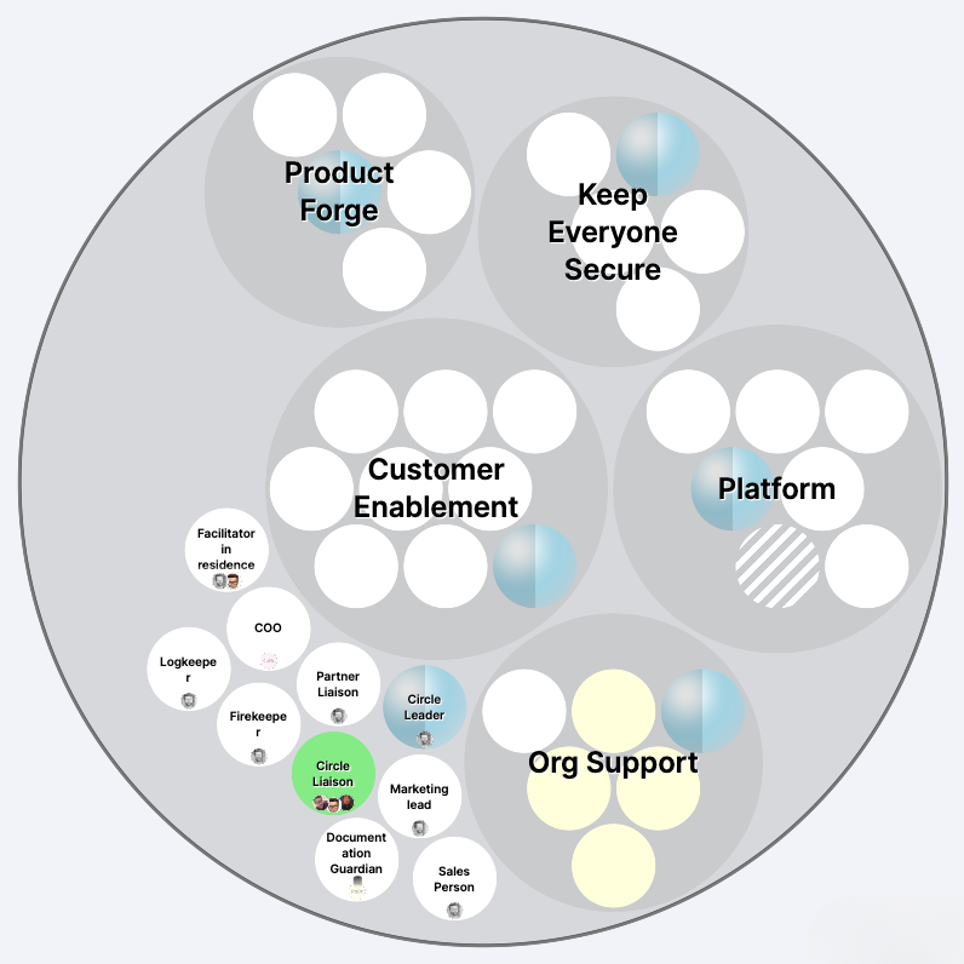
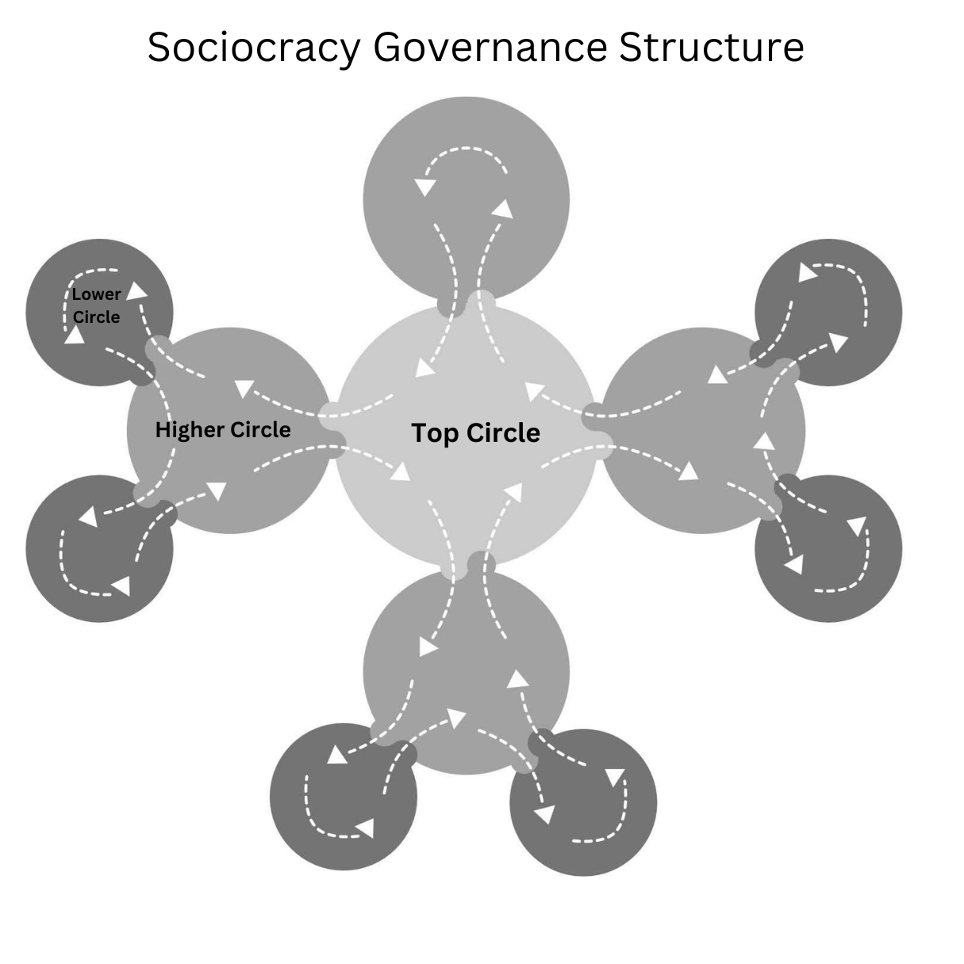
Not teams, but Circles
Here’s something important: a Circle is not a team of people. Instead, it’s a collection of functional roles that all contribute to the circle aim. Roles in turn are then held by people, also called Role Holders, that then become members of that Circle.
This distinction matters because the same person might hold Roles in multiple Circles, aligning their diverse skills and talents with different areas where the organization needs them.
Roles are where the work happens
As already mentioned, in each Circle the work is divided into Roles. These are much more focused and smaller than traditional job descriptions. A person typically holds multiple roles, even across different circles. The combination of all Roles a person holds, is effectively his or her job description.
Roles provide clarity: everyone knows where to go, who does what, and who’s accountable for what. It’s where the work really happens.
Each role has a name, Aim (its purpose) and Accountabilities (what it’s responsible for organizing and paying attention to). Just like Circles, some roles may also have Domains.
Aims: the mission
Think of an aim as the “why” behind everything we do. It’s the clear, inspiring purpose that describes what the organization, circle, or role wants to achieve.
An aim is outcome-focused: it defines the intended result, not just activities. It serves as a guiding North Star that helps everyone stay aligned on what matters most. Even without detailed role descriptions, a well-crafted aim should give enough inspiration to know what direction to head in.
Domains for company-wide decision-making authority
A Domain is an area of responsibility and decision-making authority that a Circle or Role has autonomy over for the whole company.
This unique concept is designed to decentralize decision-making. Instead of needing company-wide approval for every decision, Circles and Roles can make autonomous decisions within their assigned domains. This prevents bottlenecks, speeds up our work and decisions are better informed.
For example, if a Circle has the Domain of “customer support processes,” they have full authority to make decisions about how support is delivered across the entire company. They don’t need to ask permission from the entire company or some manager (which we don’t have).
Circles can also carve out sub-Domains and assign them to Roles within the Circle, further distributing decision-making power to where it makes the most sense.